
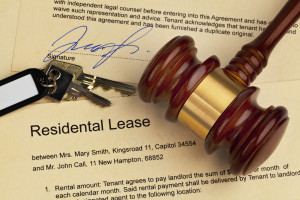
Signing a lease is a big commitment. A lease is a contract between two parties, namely the landlord and the tenant. Each party has duties and responsibilities outlined not only in law but also in a lease relating to the specific rental agreement. Of course, even without a lease, both parties are still bound to certain duties.
However, the advantage of a lease is that it is often a clear outline of the specific rules, responsibilities during the lease term as well as anticipating and planning for issues that may arise (ie. subletting, lease renewal, cancellation, advance notice, seasonal maintenance, resident restrictions, pets, etc.)
Like any contract, a lease can often be a bit intimidating for a first time tenant. And this has led to a lot of misconceptions and myths about leases.
Here's my Top 5 Myths About Signing A Lease:
MYTH #1 - All Residential Tenancies Must Include A Lease
Not true. Many landlords may offer their properties for rent on a month-to-month basis that may be drawn up in a "rental agreement" instead of a lease. A rental agreement is a sort of like a lease in the sense that it outlines the responsibilities and rules of the building and tenant duties. However, the major difference is that a rental agreement usually doesn't not specify a rental term. So essentially, it's an outline of rules for whatever duration the tenant will remain a resident at the property.
Of course, some landlords rent out their properties on a handshake and first month's rent with no written agreement whatsoever. I wouldn't advice either a landlord or tenant to enter into this sort of agreement lightly. But it's important to note that a lease is not a technical requirement of tenancy in almost all jurisdictions.
MYTH #2 - Leases Only Benefits The Landlord
Not true. This is a big misconception. Yes, it's true that the lease may have certain clauses that benefit the landlord, but usually in context to the risks of renting a property to a tenant. I would argue that by the fact that these clauses are stated upfront gives the tenant the advantage of decided whether or not to sign, amend, or walk away from the lease (and rental unit).
Leases also benefits the tenant by stipulating exactly what the specific conditions, rules, remedies, and responsibilities are from the landlord and the tenant perspective as well as outlining the processes involved in common actions relating to the rental period. A lease removes guess-work and is a basis of a formalized agreement that allows the landlord-tenant relationship to be clearly defined and run smoothly.
Finally a lease locks in a rental period which also gives the tenant security that they will have a home for that period of time in the lease term (provided they meet their obligations in the lease).
MYTH #3 - When You Sign A Lease, You Sign Your Life Away
Not true. Sort of related to the above myth, a lease is - by design - a document that clearly defines the roles of a landlord and tenant in relation to the rental period of the rental property. However, a lease is not an ironclad document that can enslave tenants if written out by some masochistic landlords. On the contrary, a lease does not trump the law. In most jurisdictions in Canada and the US, contract law and specific federal, provincial/state laws always takes precedence over the terms of a lease.
For example, if local landlord/tenant laws do not permit an arbitrary increase in rent during a lease term, a landlord cannot add a clause that says something like "Tenant agrees that landlord can raise rent up to 50% during lease term at his/her discretion". Well, a landlord COULD put the clause in and the tenant could read, agree, and sign it, but it would not be enforceable as it contravenes the local laws. A contract (including a lease) cannot break the law.
MYTH #4 - You Must Renew A Lease To Remain A Tenant
Not true. Some landlords mistakenly believe that a tenant must sign a lease renewal to remain a tenant. For most residential tenancies in most jurisdictions, this is not the case. What typically happens is that a tenant becomes a month-to-month tenant after a lease period expires without a signed renewal. The original lease now serves as a rental agreement but the rental term stipulations no longer apply. Of course, the tenant must still comply with their duties, rules, and regulations of the original agreement.
Check with your own local laws and practices to get a better understanding of what options are available at lease end. But one thing is for certain everywhere: no tenant can be 'compelled' to sign a contract/lease against their own will.
MYTH #5 - Leases Must Follow A Specific Format
Not true. Leases must have the name of tenants and landlord, term, rent, and signatures. But the rest is up to the landlord [and tenant]. Usually the landlord will structure the leasing agreement to stipulate the specific responsibilities and consequences of actions/inaction's. Some leases are 20 pages or more, while others can be 1 page.
Also, a tenant may be able to amend a lease with the agreement of the landlord. Too often, tenants think the lease must be accepted as is. But if there's some concerns or some elements that require extraction, clarification, or new clauses to be added, a tenant can certainly negotiate a lease. Of course it takes both parties to agree to the terms the have a lease in force. But it's still important to remember there is not fixed format for a legal lease beyond the most basic contractual elements.
So do you feel smarter yet? How many of these did you think were true? Share your lease signing experiences here!


